26 November 2026
What Happens When You Need a Root Canal in Hillside, NJ?
For a tooth that may need a root canal in Hillside, NJ, the next step is to call a dentist, describe the pain and any swelling, and get an exam to find the source. Community Smiles offers same-day emergency visits and root canal therapy, and a call to (908) 409-7100 can set up the exam. Swelling that spreads or trouble breathing needs 911 first.
Hot coffee used to be harmless. Now one sip sends a sharp jolt through a back molar, and by evening the ache has settled into a steady throb. The dentist's number is not saved in the phone, so the search box gets "root canal near me" instead. A root canal sounds like a big step, but it follows a clear order. The sections below walk through it from the first sign to the final crown.
Signs That Point to a Root Canal
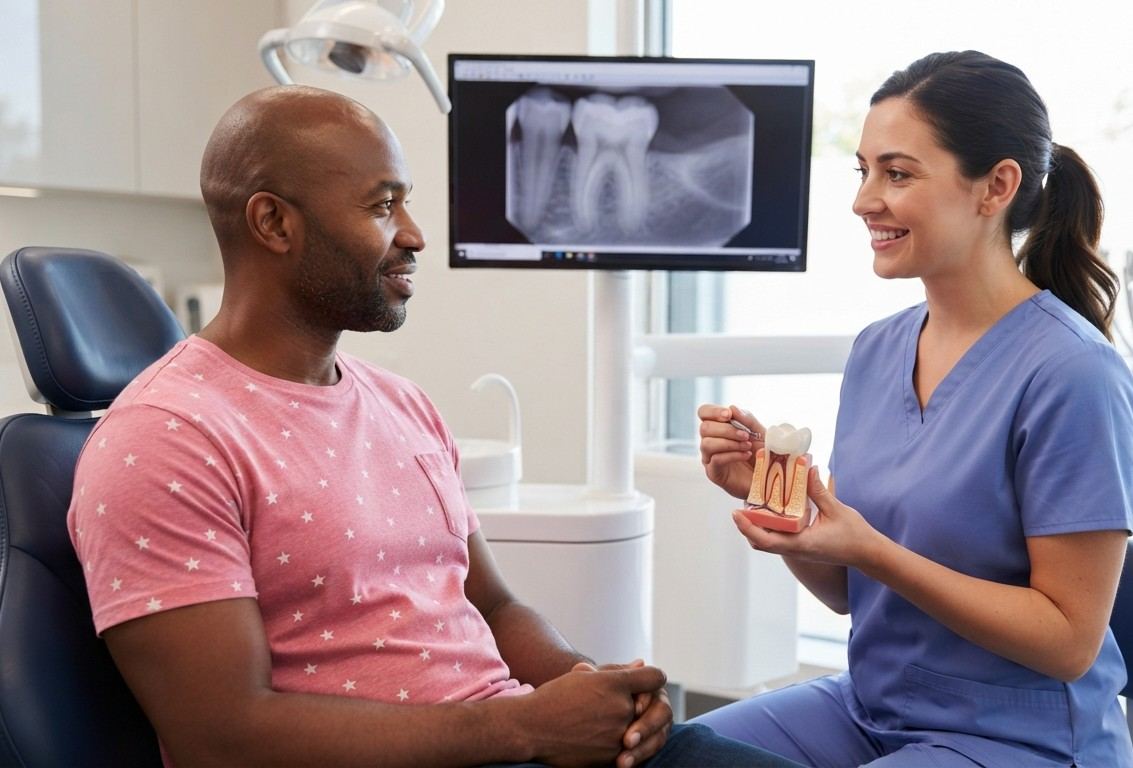
A root canal is for a tooth where infection or deep decay has reached the pulp, the soft center with the nerve. The American Dental Association lists a deep cavity, repeated dental work on the same tooth, a cracked tooth, and an injury as common causes, with pain, swelling, or an abscess as warning signs. A tooth that lingers in pain after hot or cold, hurts when biting, or sits beside a swollen gum deserves an exam soon.
Who to Call and What to Say
Calling first beats showing up with no warning. A short call should cover:
- Pain: Where it hurts, how long it has lasted, and what sets it off.
- Swelling: Any puffiness in the gum, cheek, or jaw, plus any fever.
- History: Past work on the tooth, such as a large filling or crown.
- Timing: How soon a visit can happen.
Our team offers same-day emergency dentistry visits for toothaches and infections, and root canal therapy is part of that care when the exam shows it is needed.
What Happens During Treatment
The visit begins with an exam and imaging to find the source of the pain. Our dentist then removes the inflamed or infected pulp, cleans the canals, and seals them. The ADA adds that the tooth is numbed first and kept dry during the work. Root canal treatment is designed to relieve pain and save the natural tooth, and follow-up visits make sure healing is on track.
Does a Root Canal Hurt?
Far less than the toothache that led to it. Local anesthesia keeps the procedure comfortable, gentle techniques are part of our approach, and sedation options are available when a patient needs more help relaxing. Some tenderness can last a few days afterward, which usually eases with the pain relief our team recommends. Patients who have avoided the dentist out of fear can say so on the first call. Nervous patients are common, and a calm explanation before each step helps the visit feel manageable.
Protecting the Tooth While Waiting
A few habits calm the tooth until the visit:
- Chewing: Use the opposite side of the mouth and avoid hard or sticky foods.
- Temperature: Skip very hot and very cold drinks.
- Swelling: Hold a cold compress against the cheek.
- Pain relief: Take over-the-counter medicine as directed. Aspirin should never be placed on the gums, because it can burn the tissue.
Why the Crown Matters
A tooth without its nerve can be more brittle. After the canals are sealed, the tooth is restored with a strong filling or a crown that protects it from cracking. The ADA says a follow-up visit replaces the temporary filling with a permanent one. Planning the crown at the same time as the root canal keeps the timeline clear.
When the Tooth Cannot Be Saved, or Needs a Second Look
Not every tooth can be rescued, and the exam shows which path fits. If saving the tooth is not possible, tooth extraction is one option, and dental implants can replace the missing tooth later. A tooth treated years ago that hurts again may need endodontic retreatment, and an abscess can call for drainage along with antibiotics and monitoring.
Paying for a Root Canal
Cost is part of the plan, and it is fair to ask about it early. We accept insurance, and coverage for root canals varies by plan. Our team can check benefits during the call, explain affordable options, and go over any remaining costs before treatment begins. Settling payment questions ahead of the visit lets everyone focus on the tooth.
When the ER Comes First
Most toothaches can wait for a dental visit, but some cannot. Swelling that spreads across the face or neck, a fever with a swollen face, uncontrolled bleeding, or any trouble breathing or swallowing calls for 911 or the nearest emergency room. Contact us once that care is handled.
At Community Smiles
At Community Smiles, patients looking for a dentist in Hillside, NJ can describe the problem by phone and get a plan before coming in. Our team cares for children and adults from Hillside, Elizabeth, Union, and Newark, and keeps the explanation clear at every step.
Get the Tooth Looked At
A tooth that throbs rarely fixes itself. Call (908) 409-7100 to describe the pain, or book an appointment through the website and mention the toothache.
Frequently Asked Questions
Yes, we offer root canal treatment, along with retreatment for teeth treated before and care for dental abscesses.
Our team offers same-day emergency visits for toothaches and infections. After the exam, we explain the treatment plan and how many visits to expect.
We use gentle techniques, and local anesthesia keeps the procedure comfortable. Some sensitivity can follow for a few days.
The tooth is restored with a filling or a crown to protect it. Our dentist explains which one fits after treatment.
We accept insurance, and coverage varies by plan. Our team can check benefits and explain payment options during the call.